

The great summer weather is the perfect time for long cycling trips alone or with friends. Although for many people, the bike is simply a means of communication in the city, it is worth seeing more of its
Activity zone 4F
In this zone, your heart rate rises at the mere thought of the next workout. You'll find the best ways to exercise effectively, discover new disciplines, and choose an outfit that suits your needs. We'll also guide you through the clothing care process and advise what to buy for enthusiasts of various sports. Our blog is a guide for everyone who wants to feel motivation 4 times more!
Published: 4/12/2024🏊 Water sports
)
)
)


)
)
)
)
)

)
)
)
)
)
)
)
)

)
)
10 health benefits of swimming that you’ve got to know about

Swimming skills come in handy both on everyday basis and during holidays when we’re active by the sea or swimming pool. Physical activity in the water brings numerous health benefits that you may not even be aware of. How many calories does swimming burn? Can regular swimming prolong our life and improve lung capacity? Which swimming strokes are best for your spine? Do you want to know what are the benefits of swimming?
- 10 health benefits of swimming
- Popular swimming strokes
- Pool – advantages for those looking for a way to improve their figure
- What should you remember about at the pool?
- Swimming is for everybody
In this article:
- Swimming is a full-body exercise that provides numerous health benefits, including improved cardiovascular health, weight management, stress reduction, and mood enhancement.
- Regular swimming can improve overall fitness and physique.
- Different swimming strokes target different muscle groups and offer varying benefits. Popular swimming strokes:
- Breaststroke: Easy to learn, good for chest muscles and people with scoliosis.
- Freestyle: Efficient for burning calories, works the entire body.
- Backstroke: Gentle on the back, strengthens muscles supporting the spine.
- Dog paddle: Basic stroke for beginners, mimics dog's paddling motion.
- Butterfly: Difficult stroke for advanced swimmers, burns calories quickly.
Short summary:
10 health benefits of swimming
1. Improves the respiratory system
Swimming has a positive impact on the respiratory system as it improves lung capacity. Swimming is the most beneficial when we swim with our head underwater, as it forces the respiratory tract to work more efficiently. Average lung capacity is about 5 litres, but elite swimmers can boast the capacity of as much as 11 litres.
2. Has beneficial impact on joints
What are the biggest advantages of swimming? It has a great impact on our entire body. Water perfectly takes some of the pressure off of the entire body, as it is up to 10 times lighter in the water due to buoyancy. That’s why swimming is particularly recommended to those injured or suffering from joint problems.


)
)

)
)

)
)
3. Helps reduce excess weight
Does swimming make us slim? We can burn as many as 600 calories during one hour of intense training in the water. That’s why swimming uses more fat deposits than moderate exercise on the land (such as running). What’s more, dropping regularly by the pool helps build muscle mass and an impressively sculpted body. What muscles are used during swimming? Everything depends on the strokes we choose. More on that in a moment.
4. Gives the circulatory system a boost
Swimming boosts the function of the heart and the entire circulatory system, thus prolonging our life. If you’re wondering what benefits does swimming have, the answer might come as a surprise to you. Thanks to this activity, your chances to avoid heart diseases are 60% higher compared to people who do not exercise regularly. Swimming is also recommended to heart attack survivors.
5. Improves stamina and endurance
Swimming is a demanding sports discipline that engages, and thus strengthens, all the large muscle groups. As we exercise in the water, we get our entire body working, not only a selected part as it happens with the majority of sports. Moreover, depending on the pace and selected stroke, we can significantly improve stamina and endurance.
6. Positively affects the mood
We feel light and calm in the water, especially if we can swim. What’s more, every sport releases a dose of endorphins that boosts our mood. According to research, those who swim regularly are rarely affected by depression and are generally happier.
7. Helps improve bad posture
Swimming and spine? Physical activity in the water doesn’t put extra pressure on the spine and joint. It perfectly strengthens the muscles responsible for supporting the entire body. That’s the main reason behind recommending swimming to those affected by scoliosis or having a sedentary job.
8. Improves body flexibility and motor coordination
Water allows us a greater range of movement without the risk of injury. At the same time, we’re working on the flexibility. To master a given stroke, we also need to be able to coordinate all of our movements and the functioning of the respiratory system.
9. Reduces bad cholesterol level
According to research, swimming 3 times a week for 30 minutes significantly reduces blood pressure, thus contributing to lower resting heart rate which has an influence on reducing bad (LDL) cholesterol level in blood. Swimming – the benefits for your figure and health are undeniable.
10. Helps reduce stress
Just like other physical activities, swimming is a great way to reduce stress and release excess energy. After a hard day, it takes just 30 minutes of relaxation in the water to release muscle tension and feel more relaxed and satisfied.

Popular swimming strokes
Each stroke requires learning, but even if we know a few of them, we aren’t always aware of their benefits or dangers they might pose for our health. Majority of us swims ‘freestyle’ or the ‘breaststroke’ – so let us take a closer look on 5 most popular strokes and characterise them briefly.
Swimming breaststroke – the ‘frog’ stroke
The most popular swimming stroke observed at the pool. Very often performed incorrectly. In the classic breaststroke, we move our head out and into the water with the simultaneous symmetrical movement of the arms and legs (resembling a frog’s moves). This stroke greatly contributes to the development of chest muscles and is particularly recommended for people suffering from scoliosis. Swimming breaststroke – the benefits are undeniable, but you have to watch your correct posture while swimming.
Swimming freestyle – the ‘crawl’ stroke
The fastest of all swimming strokes that is not at all that hard to master. In the classic crawl variation, we perform alternating arm and leg movements that need to be perfectly synchronised with breathing. This stroke engages the entire body and is recommended for more advanced swimmers. If you’ve found yourself wondering: ‘does swimming make you lose weight’, you should definitely learn how to swim freestyle.
Swimming backstroke
One of strokes that do not require constant movement of the head up and down the water. In the classic backstroke variation, we make alternating movements of the arms and legs. When swimming with this stroke, we should remember to keep our hips pushing upwards. The arm should enter the water straight and then bend at the angle of about 100 degrees. Swimming backstroke puts the least strain on the back while strengthening the muscles supporting the spine.
Swimming dog paddle
Dog paddle belongs to rather simple swimming strokes and is intended for beginner swimmers, especially children. It’s the oldest swimming technique that consists of alternate movements of arms and legs, mimicking the swimming stroke of the majority of swimming animals. However, it’s not very practical and it’s rarely used by adults.
)
)
)
£15.64
)
)
)
)
)
)
)
)
)
)
)
)
)
)
)
)
£13.09
)
)
)
)
)
)
£15.64
)
)
)
Swimming butterfly
A difficult stroke also known as ‘fly’, mastered mainly by professional swimmers. This stroke consists in using the body to mimic the movement of a swimming dolphin while performing circular movements with the arms to increase the speed. Its greatest benefit is quick calorie and fat burning, as it requires exceptional physical fitness and coordination.
Pool – advantages for those looking for a way to improve their figure
-
Swimming and figure
Swimming greatly improves the way your body looks, but you’ve got to remember about regularity. Depending on the chosen swimming stroke, we can notice the development of selected muscle groups. Usually it is the shoulders and arms that become more pronounced, so while men are likely to be satisfied with the effects, women should watch out for changes in the figure.
-
Swimming and cellulite
Every physical activity helps burn adipose tissue and remove toxins from the body. Swimming and cellulite? Of course! Such a physical activity firms up the body, breaks down and eliminates fat accumulated in tissues. That’s why it’s very much recommended when we’re battling such problems. Of course, we should remember that eliminating cellulite requires appropriate diet, cosmetic treatments and regular actions.
-
Pool and losing weight
Swimming and losing weight? Of course! Just as we’ve written before, swimming burns even up to 600 calories, a value similar to one achieved after an hour of jogging. Losing weight is mainly related to caloric intake lower than our body’s demand. If we do not care for appropriate diet, swimming and counting calories won’t help us reduce excess weight.
-
Swimming and abdominal muscles
We’ve already covered the ‘swimming and figure’ issue, but what about the impact swimming may have on abdominal muscles? Contrary to appearances, they’re also affected by this exercise through constant muscle tension that helps us float. As many as 40 muscles are involved during water workouts, including straight and oblique abdominal muscles. For fastest results, you should choose butterfly stroke, as it requires the most strength of all known swimming strokes.
What should you remember about at the pool?
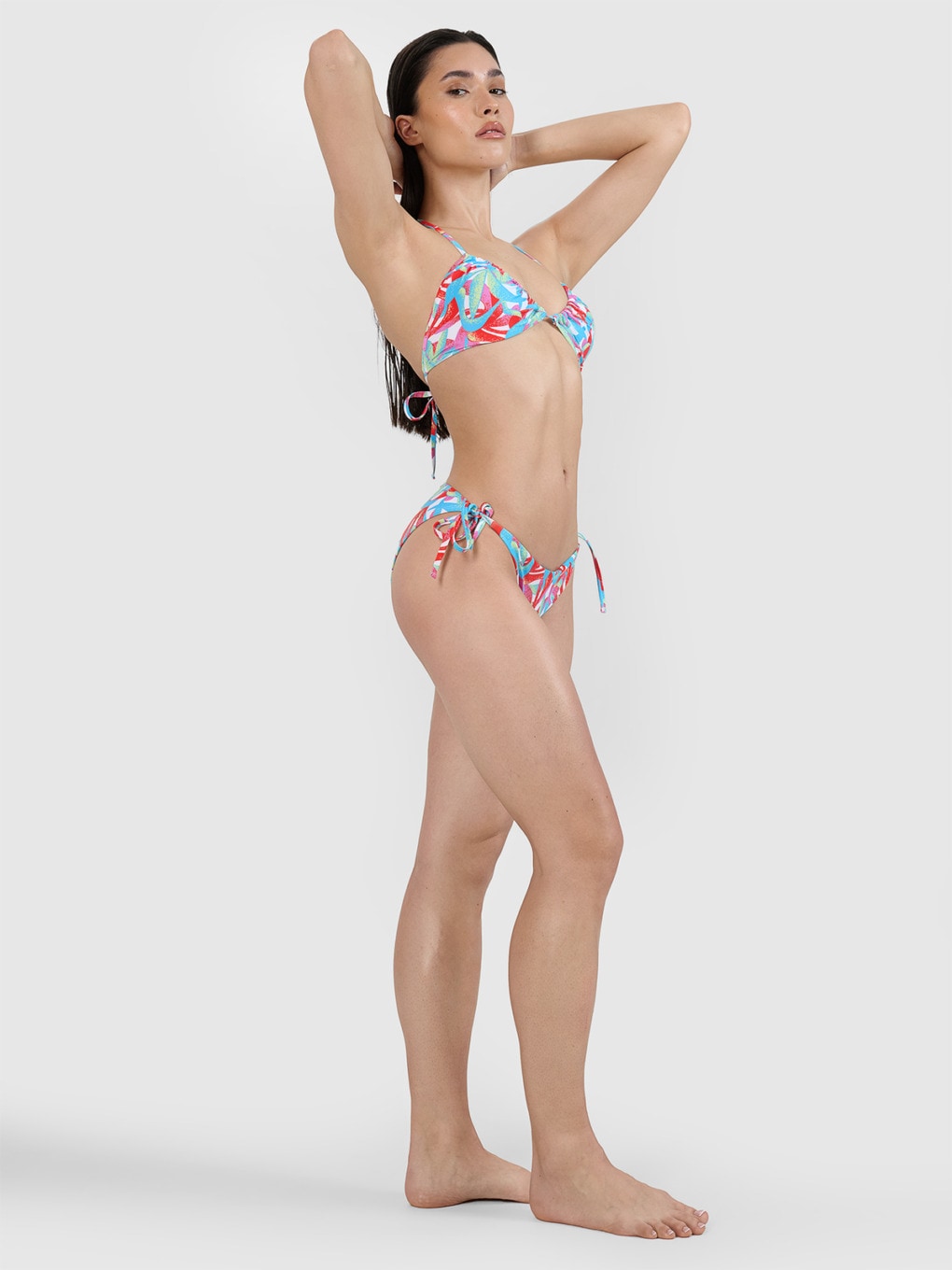
When heading to the pool or the beach, we should put on a form-fitting swimsuit. It’s important that it’s made of high-quality fabric so that chlorinated or salt water won’t negatively affect it. If swimming fast is your thing, a sporty swimsuit without accessories will be the best choice. Here you can find women’s swimsuits by 4F and here are 4F’s men’s swimming shorts.
)
)
)
)
)
)
)
)
)
)
)
)
)
)
)
)
)
)
)
)
)
£39.22
)
)
)
)
)
)
)
£15.64
)
)
)
£11.27
)
)
)
)
)
£28.74
)
)
)
Obviously, while at the pool, it is also recommended to put on a swimming cap and slides. Covering your head not only protects the hair against chlorine; it also helps lifeguards during rescue efforts. Slides, on the other hand, protect against bacteria and fungi that grow in the water environment, particularly on the tiles surrounding the pool. If you can – and enjoy – swimming with your head underwater, you will also need swimming goggles that protect the eyes against reddening and irritation. It’s not recommended to overeat before swimming – here it’s worth to adhere to basic rules on eating before, after, and during training.
Swimming is for everybody
It’s best to start learning to swim at an early age, to reap the beneficial influence of water on our entire body and mind from young years. After all, we are born in water and, contrary to appearances, it’s our natural environment. Swimming has not only plenty of health benefits, it also allows for great fun during holidays. All in all, it’s hard to give windsurfing, kayaking or yachting a try without this skill. Still, you have to prepare for a trip to the pool or the lake: a proper swimsuit and right accessories are essential to make the most of business and pleasure.
Feel free to check out the 4F water sports section, featuring the new collection of swimwear.
£13.09
)
)
)
)
)
)
)
£13.02
)
)
)
£22.62
£39.22
Popular on the blog
- 🚴 Cycling
Mountain Biking – The Best Mountain Bicycle Routes In Poland
The great summer weather is the perfect time for long cycling trips alone or with friends. Although for many people, the bike is simply a means of communication in the city, it is worth seeing more of its
- 🚶 Trekking|💡 Tips
What to wear hiking? Choosing the right outfit for a trekking
Does it feel like the mountains are calling, and you must go? Are you an experienced hiker conquering trails? Or maybe you're planning your first hiking trip? It doesn't matter where you're at with your
- 🏊 Water sports|🏂 Winter sports
Facts and myths about winter swimming
Winter swimming is not only a great way to get yourself moving in the open air and boost the natural immunity of the body, but it is also an excellent opportunity to spend time with friends. Fall and winter
- 💡 Tips|✨ Lifestyle
What should you wear when it’s cold in the morning but warm later on?
It may seem sunny, yet still chilly? The weather in Poland, especially during transitional seasons, is constantly changing. If you’re standing in front of your wardrobe wondering how to dress for 15 degrees
Get to know sport inside out


