In 1996, a scientist, Dr Izumi Tabata, conducted studies in Japan to verify advantages of interval anaerobic exercises, today known as high-intensity interval training (HIIT). The training used 20 seconds of exercise followed by 10 seconds rest – the cycles were repeated eight times, to achieve a training of four minutes.
Time is the only resource that we cannot increase in any way, so if you want to achieve required results faster, the Tabata regimen is for you. Of course, if you love to spend hours at the gym, nobody will stop you, but if you are looking for an express training taking just a few minutes, then you should try HIIT. The Tabata regimen training takes 4 to 5 minutes, but you have to warm up before and stretch after the activity, so the entire training takes 10 to 12 minutes.
Tabata regimen advantages
-
Increases metabolism for up to 48 hours after training, burning even 250–300 kcal in total (ca. 60 kcal during the training, excluding warm up and stretching).
-
Burns even 14.5 kcal in one minute – more than during running.
-
Involves many muscle groups.
-
Helps to reduce the amount of the fatty tissue.
-
Already after 2 weeks of exercises, the rate of fatty acids decomposition increases by 30%.
-
Improves aerobic and anaerobic capacity.
-
Improves strength.
-
Sculptures your body.
Who should look for a different training?
-
People with cardiovascular diseases,
-
sportspeople who suffered an injury,
-
inactive people over 40 years old, or beginners in a poor shape,
-
everybody who mainly wishes to lose weight and tone their body,
-
people with respiratory problems and with joint diseases and injuries.
The Tabata regimen – is it truly so effective?
Does the Tabata regimen really work? The recent studies show that 4 minutes sessions can be more effective in improving aerobic capacity than 30 minutes spent on a treadmill. According to the research, during 6 to 12 weeks of training, VO2max can increase by 9.2-15%, and MAOD can rise by 20.9-35%.
The HIIT, also termed the Tabata regimen, may be all you need to maintain your previous fitness level. However, it is important to perform it at a full intensity possible at a current level of training.
The Tabata regimen – two sets of exercises for beginners
The Tabata regimen may be very exhaustive for the beginners, so if you are not able to perform all 8 exercises, you can stop at 7 while enjoying similar results of the training. Remember to have a timer, a stopwatch or a relevant application to determine when to start your exercises and when to stop to catch your breath. If you want to increase the pace, definitely play some energetic music or find the “tabata song”, a special music with a 10 seconds break.
We prepared for you a set of four exercises; however, you can perform just one exercise in each Tabata series – this is a “real Tabata”, on which Dr Tabata based his studies. Why? This differentiation results from the fact that when different exercises are performed, selected muscle sections rest, so you do not feel so tired, and thus you achieve slightly different results. Such training also has great results and is an excellent introduction to the Tabata regimen world for less fit people.
Some sportsmen indicate that the “real” Tabata regimen is not appropriate for the beginners, as they cannot endure its pace and load, not mentioning a correct technique of performed exercises. There is a grain of truth in that opinion – if you never exercised and do not know a correct technique of the exercises, or when you are out of breath after climbing some stairs, it is better to start with conventional trainings, and to include the Tabata regimen in your routines at a later stage.
The Tabata regimen – a set of exercises that can be performed throughout the 4 minutes session
Burpees
Stand with feet hip-width distance apart, tighten your abdominal and buttock muscles. Bend your knees, place your hands on the floor with your elbows and shoulders in one line, then bend your body parallel to the mat and thrust your legs backwards to reach the extended plank position supported on your hands. Do a push-up, then straighten your elbows, push your hips backward and draw your knees under your chest. Go back to the bottom squat and jump up, pushing with your feet. You can perform this exercise without the plank or the jump, if it is too demanding for you.
Mountain Climber
Place your body supported in front of your hands, with your shoulders above your wrists, and feet hip-width distance apart. Tighten your buttock muscles, push your chest forward, with your head in a neutral position. Start to move your knee towards your elbow, close to the floor and then, without touching the floor with your feet, return to the initial position, and repeat for the other leg. The exercise should be very dynamic.
Star jumps
Stand with your feet slightly apart, with your hands down along your body, and your shoulder blades drawn together. Jump up with the legs spread wide and the hands going overhead, and return to the initial position. Repeat all activities dynamically.
Jump squat
Stand with feet hip-width distance apart, then push your hips backward, moving your body downwards to a squat. Remember that your knees cannot go beyond the line of your toes. Now, breathe in, straighten your legs dynamically and jump. Returning to the floor, ensure that your knees are “soft”, bend them immediately to the squatting position and repeat the jump.
What is interesting, the Tabata regimen does not have to be a set of exercises with your own body weight, as it is perceived by the majority of people. A training of this type can even be performed on a treadmill, when cycling, or during other activities. It should be remembered that it is not intended as a warm-up before the actual training – it should be followed by a rest, and not by the training.
How often can I do the Tabata? Maximum three days a week, leaving time to regenerate. Also, do not stop other trainings, treat it just as a variation.
What to wear for the Tabata exercises?
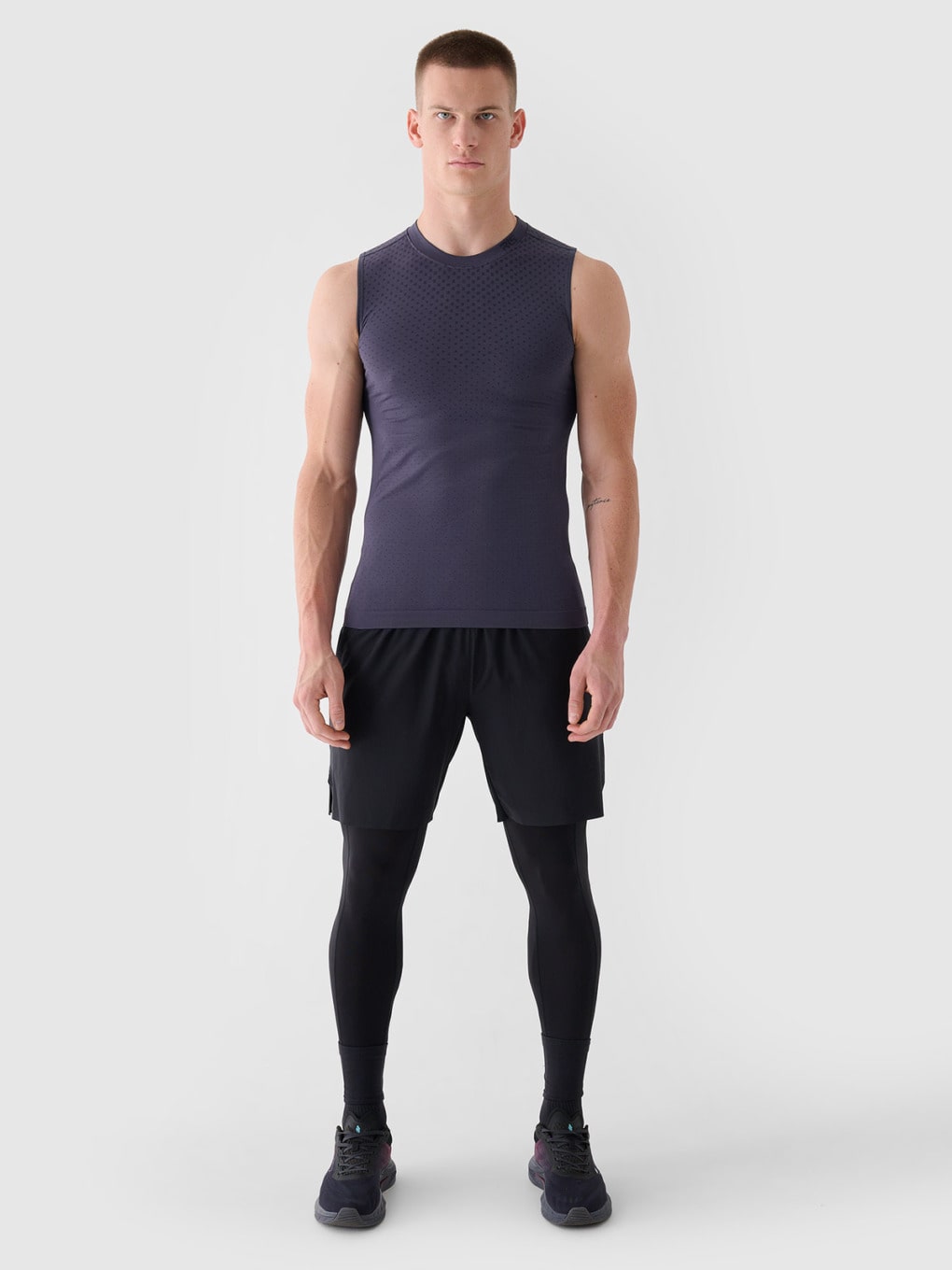
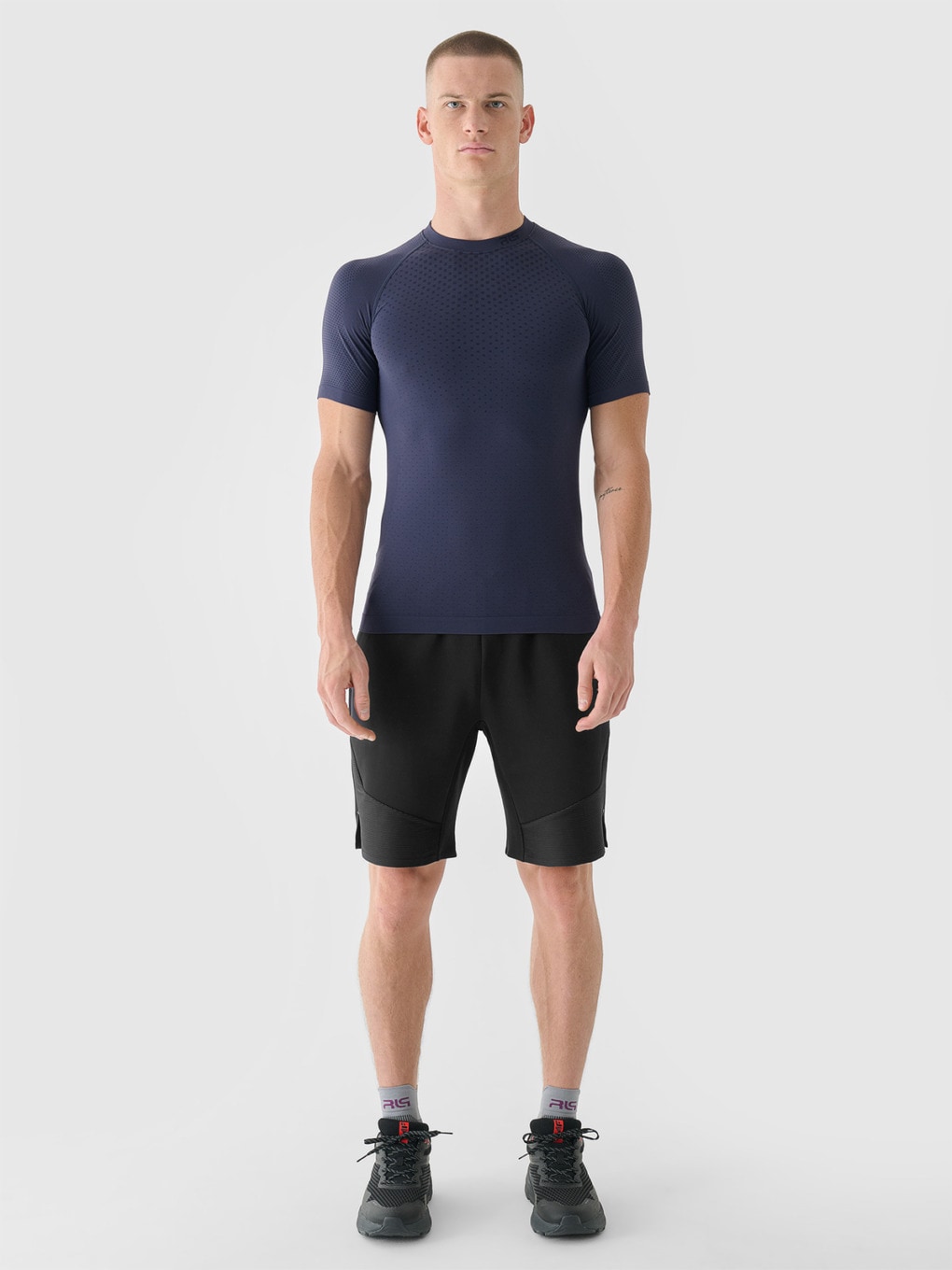
The Tabata regimen requires comfortable sport outfit, which will not cause any abrasions during intense movements. A quick-drying training T-shirt and shorts or leggings of the length most comfortable for you would be the best choice. The clothes can either be tight-fitting or loose. Do not forget about footwear – at such high intensity, it has to have an anti-slip sole and stabilise your foot well. We recommend taking a look at the fitness/gym clothes range, where you will find technical outfits made of quick-drying fibres in modern technologies, which would improve your comfort during the Tabata exercises.

Controversies concerning the Tabata exercises
Initially, the Tabata regimen was intended for Olympic sportspeople; however, today it is also used for other sportspeople, designing training regimens inspired by the Tabata method. Our proposal is in this spirit. If you are an advanced sportsperson and look for the “real” Tabata regimen, go to a site concerning this subject.
Are you ready for your training? Check out our new collection of clothes and promotions to find the best outfit in which you can achieve even more.


)
)
)
)
)
)
)
)
)
)
)
)
)
)
)
)
)
)
)
)
)
)
)
)
)
)
)
)
)
)
)
)
)

)
)
)
)
)
)
)

)
)
)
)
)
)
)
)
)
)
)
)
)
)
)
)
)
)
)
)
)
)
)
)
)
)
)
)
)
)
)
)
)


