

The great summer weather is the perfect time for long cycling trips alone or with friends. Although for many people, the bike is simply a means of communication in the city, it is worth seeing more of its
Activity zone 4F
In this zone, your heart rate rises at the mere thought of the next workout. You'll find the best ways to exercise effectively, discover new disciplines, and choose an outfit that suits your needs. We'll also guide you through the clothing care process and advise what to buy for enthusiasts of various sports. Our blog is a guide for everyone who wants to feel motivation 4 times more!
Published: 9/23/2021💡 Tips|🏋 Fitness

)
)
)
)
)
)
)
)
)
)
)
)
)
)
)
)
)
)
)
)


Water retention in the body and training - how to avoid retention

Do you train regularly, eat meals of calorie content that should lead to a gradual weight loss, and still your scale shows the same result? You increase the intensity and the frequency of your trainings, you eat less, and it is worse than before? This may be caused by water retention, affecting both women and men. Learn what causes it, how to prevent it, and what to do if it is not the first time.
-
How water influences sport efforts? Consequences of dehydration
In this article
-
Symptoms of water retention: Changes in body proportions and places of its location, heaviness, and lack of energy.
-
Causes of water retention: Too high cortisol levels, disrupted potassium and sodium balance, too low water intake, female hormones, and sedentary lifestyle.
-
How to manage water retention: Reduce sodium intake, increase potassium intake, take a break from intense workouts, supplement liquids, and try lymphatic massages.
-
When water retention is not a problem: It is a normal part of the regeneration process following an intense training.
-
Consequences of dehydration: Decreased mental and physical capacity, reduced work efficiency, and increased risk of health problems.
-
Importance of hydration: Water participates in most chemical reactions during exercise, so it is important to stay hydrated before, during, and after exercise.
-
When to see a doctor: If water retention persists despite following all recommended measures, consult a doctor to rule out any underlying medical conditions.
Short summary
Excess water or fat, after all
What are symptoms of water retention in the body? Contrary to what one might expect, they are not swellings, but changes in body proportions and places of its location. This occurs when too much water leaks from blood vessels and accumulates outside or inside cells. It is sometimes noticeable in feet, hands, or a face (though sometimes it is said that this opinion is not reliable), and it is accompanied by heaviness and a lack of energy. The most appropriate way for determining water retention is a periodic increase in the body weight. However, how can it be distinguished from weight gain?
You must observe how fast your body weight increase. If it fluctuates significantly within a few days, this may indicate water retention. However, the best solution is to use a professional device that will check whether that increase concerns the amount of the fatty tissue or a percentage water content in your body.
What can cause water retention?
Too high cortisol levels
Cortisol is a hormone produced by adrenal glands in response to stress or low sugar blood levels. The majority of our cells has receptors for cortisol, a compound that influences sugar blood levels, metabolism, the central nervous system, and water retention. What do cortisol and water retention have in common? Studies show that prolonged calorie deficit drastically increases its levels, causing many negative effects, including the increased water retention. How can you manage this situation? Just increase your calorie intake for some time, so the weight loss will be visible during a period of “reversed diet”.
Disrupted potassium and sodium balance
Too high sodium intake may lead to a situation when cells retain water until the cellular fluid balance is restored. Potassium, on the other hand, restores the cellular fluid balance, so its limited consumption may cause water retention. Sodium and potassium work together - sudden consumption of larger quantity of sodium disrupts the electrolyte balance, and this can be eliminated with the other element.


)
)
)
)

)
)
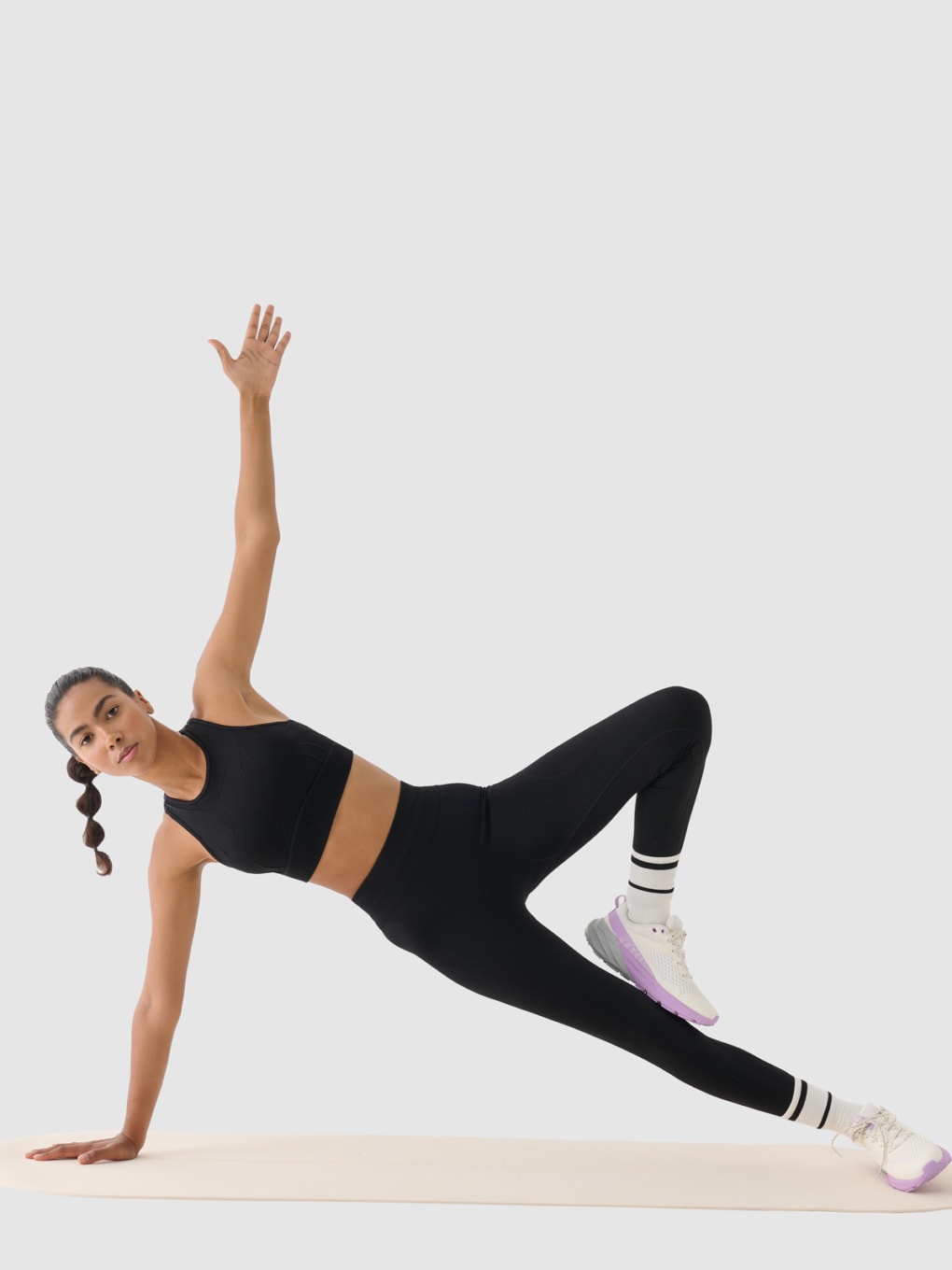
4F x Anna Lewandowska Seamless Training Leggings - Black
View product4F x Anna Lewandowska Casual Ankle Socks - White
View productToo low water intake
When your body does not receive a sufficient amount of water, its retention in the body increases, as your body wants to retain fluids already supplied to it. Hormones such as vasopressin and aldosterone are released, causing retention.
Female hormones
In the second and the fourth week of the menstrual cycle, water may be retained in the body. This is caused by oestrogen reducing pumping of lymphatic glands, which produce more hormones retaining water, such as renin, aldosterone and angiotensin. During pregnancy, the body also accumulates more water, especially in lower parts of the body, and these changes are most noticeable in the evening.
When water retention can be your problem:
-
your calorie intake is too low,
-
you train intensively, especially cardio exercises,
-
your fluid intake is too low,
-
you do not pay attention to your sodium and potassium intake,
-
for a few weeks your body weight has not decreased, despite the decreased calorie intake and intense trainings,
-
you have a sedentary lifestyle and do not exercise regularly,
-
you take contraceptive pills or are pregnant.
How to manage water retention?
When water retention is your problem, try to reduce your sodium consumption. Start with determining the quantity of it consumed per week, also taking into account the estimated quantity of salt - one teaspoon of salt contains ca. 2.3 g of sodium. If you do not follow a restrictive diet, you will quickly notice that you supply large quantities of sodium to your body and that its consumption vary between days,
What are recommendations for sodium consumption?
Daily recommended consumption is at a level of ca. 3.75 g for healthy people and 1.5 g for people with hypertension, diabetes, chronic renal diseases, and elderly. It should only be mentioned that people who sweat regularly, e.g., during a training, may have a higher demand for this element.
How can sodium intake be reduced?
Avoid packed and canned foods, where sodium is used as a preservative. It is similar in the case of cold meats. Try to reduce your salt intake and be careful when using spice mixes. Large quantities of salt are frequently used in salad dressings, or even in cheeses.
What about potassium?
The recommended daily dose of potassium is 4.7 g - and it can be found in vegetables and fruit. Some studies showed that people with the highest sodium to potassium ratio twice as often died of a heart attack.

View also: Anna Lewandowska Collection, Fitness and trening T-shirts, Fitness leggings
Trainings and cortisol
Training 5 hours a week is definitely more effective than designating just one hour for exercises, but spending 10 hours a week in a gym may have opposite effects. Too intense exercises are a burden to your body, so you will need more time to regenerate. How can I find what causes water retention? Take a short break from strength and cardio trainings, e.g., for a week, increase your calorie intake by 5 to 10%, and sleep 7 to 8 hours every day, and then see if anything has changed.
The cortisol levels can be reduced by listening to music, drinking good tea, deep breathing, taking a nap or going for a walk.
£13.02
£43.59
£26.99
)
)
)
)
)
)
)
)
)
)
)
)
)
)
)
)
)
)
)
)
)
)
)
)
)
)
)
)
)
Supplement your liquids
You definitely know that you should drink a sufficient quantity of liquids - general recommendation specify ca. 2 litres, but frequently those values are even twice as high, for example, during a heatwave, or after intense exercises. In the case of water, not only its quantity, but also quality is important. Tap water is increasingly contaminated, and bottled water frequently is no better. A good solution is to choose water in glass bottles or invest in a water filter.
)
)
)
)
Be careful with “home” methods
You often hear about foods and drinks with a diuretic effect, e.g., coffee, alcohol or even onions. Although they do have such effect on our body, they do not help in solving causes of water retention. Some sportspeople drink nettle tea, or herbal infusions of rockrose, horsetail and dandelion several days before a competition or an important training, to remove excess water from their body.
Other methods of short effectiveness
When your body is swollen and you want to remove excess water, try to take a shower changing water temperature. This way, you will improve blood circulation and the tendency for retention will be reduced. Lymphatic massages may also help.
When water retention is not a problem?
Water retention in the body does not have always to be a problem - sometimes it is even an expected reaction of the body. It develops as a part of the regeneration process following an intense training. It may be caused by a transient inflammation, signalling an onset of repair of microinjuries. Fluids are transported to injured muscle cells to support their regeneration.
Another cause is an increased amount of glycogen in muscles, and it also may cause water retention. How does it happen? When you start to exercise regularly, your body accumulates glycogen, stored in water, to better adapt to your activities. After about one month, the normal situation should be restored.
Water retention may also occur during the summer. This is particularly visible in legs, hands, ankles and feet, when blood vessels dilate in response to high temperatures. In consequence, blood circulates at a slower pace, veins lose their elasticity, and water flows to surrounding tissues, and this is visible as slight swelling.
How water influences sport efforts? Consequences of dehydration
Now you know all about water retention; however, here we also would like to mention dehydration, which may be caused by insufficient fluid intake. We mentioned it as one of the causes of retention.
What is a recommended daily water intake? 30 ml of water for each kilogram of the body weight plus additional 400–800 ml of liquids after each effort.
What is a role of water? It regulates the body temperature and participates in muscle contractions. Sweating is a basic way for maintaining an optimal body temperature; this is why it is so important to drink fluids after exercising. This way, a decrease in physical capacity is prevented, normal muscle function is maintained, and a risk of heat stress is reduced.
Loss of sweat corresponding to 2% of the body weight causes a noticeable drop in mental and physical capability, and a 5% loss reduces the work efficiency by as much as 30%. Not to mention, that the risk of diarrhoea, nausea, vomiting and stomach problems also increases.
Dehydration reduces the blood volume and its flow through skin, reduces heat dissipation, while it increases glycogen consumption and rises body temperature. What is interesting, the studies shown that dehydrated sportspeople had increased cortisol levels, and this decreases testosterone levels and, as you remember, increases retention. Water participates in the majority of chemical reactions during exercises, so correct hydration before, during and after exercises must be ensured.
If nothing helps, consult a doctor
Water retention in the body may be a completely normal situation, especially when it occurs occasionally. However, if your potassium and sodium intake is correct, you do not overdo your diet or exercises, get enough sleep and relax, and if the problem persists, consult your doctor. Better act now, as not everything is a natural situation.
Do you suffer from water retention due to irregular exercises? See the best 4F clothes for running and fitness and see for yourself how much your mood can improve during exercises.
£13.02
£43.59
£26.99
Popular on the blog
- 🚴 Cycling
Mountain Biking – The Best Mountain Bicycle Routes In Poland
The great summer weather is the perfect time for long cycling trips alone or with friends. Although for many people, the bike is simply a means of communication in the city, it is worth seeing more of its
- 🚶 Trekking|💡 Tips
What to wear hiking? Choosing the right outfit for a trekking
Does it feel like the mountains are calling, and you must go? Are you an experienced hiker conquering trails? Or maybe you're planning your first hiking trip? It doesn't matter where you're at with your
- 🏊 Water sports|🏂 Winter sports
Facts and myths about winter swimming
Winter swimming is not only a great way to get yourself moving in the open air and boost the natural immunity of the body, but it is also an excellent opportunity to spend time with friends. Fall and winter
- 💡 Tips|✨ Lifestyle
What should you wear when it’s cold in the morning but warm later on?
It may seem sunny, yet still chilly? The weather in Poland, especially during transitional seasons, is constantly changing. If you’re standing in front of your wardrobe wondering how to dress for 15 degrees
Get to know sport inside out


