Sportswear experience brand 4F is joining forces with the Wings for Life World Run to help find a cure for spinal cord injury. As a Global Apparel Partner, 4F wants to bring added expertise and fun to all
Activity zone 4F
In this zone, your heart rate rises at the mere thought of the next workout. You'll find the best ways to exercise effectively, discover new disciplines, and choose an outfit that suits your needs. We'll also guide you through the clothing care process and advise what to buy for enthusiasts of various sports. Our blog is a guide for everyone who wants to feel motivation 4 times more!
Published: 9/21/2023💡 Tips
)
)
)
)
)
)
)
)
)
)
)
)
)
)
)
)
)
)
)
)
)
)
)
)

)
)
)
)
)
)
)
)
)
)
)
)

What is closest to the skin? A word on sports underwear

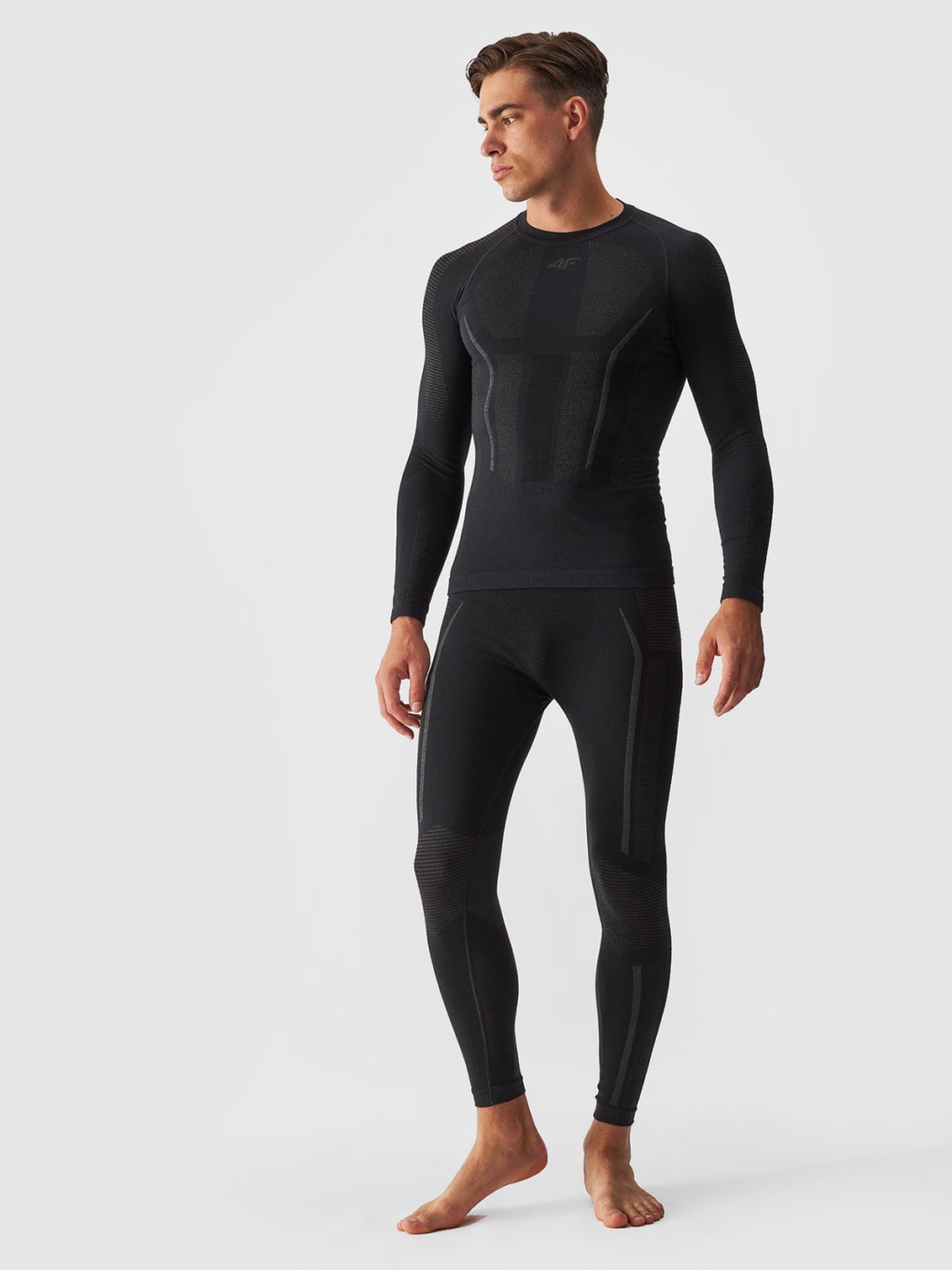
How can you prepare well for outdoor training? First of all, make sure you have functional and comfortable sportswear! It has long been known that functional underwear is the best solution when you are considering what to wear as the base layer, that is, the one closest to the skin. What is this type of sportswear, and what are its functions? What type of thermal underwear will be appropriate for a given sports discipline? How to choose it and how to wear it, and who should consider using this type of clothing? You can find answers to these and other questions in our short guide to sports underwear.
-
What’s the difference between base layer and thermal underwear?
In this article
-
What is thermal underwear? It's underwear that helps you stay warm by wicking away moisture and providing insulation.
-
What's the difference between base layer and thermal underwear? Thermal underwear is specifically designed to keep you warm, while base layers can be used for a variety of purposes, including wicking away moisture and providing insulation.
-
How to choose the right size of thermal underwear? Thermal underwear should fit snugly, but not too tightly. Take measurements of your height, chest circumference, waist circumference, and hip circumference to find the right size.
-
Does thermal underwear have to be tight-fitting? Yes, thermal underwear should fit snugly to work effectively. However, it should not be so tight that it restricts your movement.
-
What type of thermal underwear to wear in the mountains? ⛰️ When hiking in the mountains, choose thermal underwear that is made of a breathable fabric and fits snugly. You should also look for underwear with seamless construction to avoid chafing.
-
What type of thermal underwear for running? 🏃♀️ Consider both close-fitting and looser underwear, depending on your individual preferences. The most important thing is that the underwear facilitates your outdoor activities.
-
What type of thermal underwear for cycling? 🚴♀️ Choose tighter underwear for more intense effort, or looser underwear for a more recreational bike ride.
-
What type of thermal underwear in winter? ❄️ Make sure the underwear is suitable for the winter season and provides additional insulation from cold temperatures. Choose thick, high-rise leggings or a top, and avoid tops with elbow-length sleeves and short leggings.
-
What type of thermal underwear for skiing? ⛷️ Choose underwear that is not too thick and is intended for intense exercise. It should also fit snugly to effectively wick away moisture.
-
Everyday thermal clothing. Thermal underwear can also be used as an additional layer of clothing for everyday use. It is especially useful when working outdoors, walking your dog, or even going to work or school.
-
Thermal underwear - washing and cleaning 🧺 Wash thermal underwear at a temperature below 30°C and do not use washing powder or fabric conditioner. High-speed spin drying, tumble drying, and ironing are not recommended.
-
What to wear on top of thermal underwear? Wear a fleece jacket, hoodie, or soft shell jacket on top of your thermal underwear. Make sure the fabric is breathable to allow moisture to wick away.
-
How to wear thermal underwear? Wear thermal underwear directly on the body and choose a size that fits snugly but does not restrict movement. Wash thermal underwear regularly according to the manufacturer's instructions.
Short summary
Homeothermy and thermal underwear
The body of cold-blooded animals can adapt to the ambient temperature. However, humans are homeotherms, which means that their body temperature is relatively constant and independent of the ambient temperature. Thermoregulation mechanisms help them maintain their body temperature within a range that is optimal for the body. There are two basic types of thermoregulation in humans:
-
behavioral thermoregulation – all deliberate actions aimed at adapting to ambient conditions and temperatures, e.g. adequate clothing,
-
physiological thermoregulation – it is based on the man’s unconditional reflexes and all unconscious mechanisms, such as sweating or chills.
How does thermal underwear relate to the described mechanisms? It is, above all, clothing designed to be used for outdoor activities, in nature. Sports underwear is designed to help you feel comfortable during outdoor sporting activities, and thus contribute to your achievements. What is thermal underwear, and how does it work?

What is thermal underwear?
Such underwear can be made of natural fibres (e.g. merino wool underwear), synthetic fibres (e.g. polyester and elastane) or a blend of both. Men's thermal underwear most commonly includes pants, leggings, and a long- or short-sleeved shirt. Women’s thermal underwear comprises of the above-mentioned set and a bra or a top. Thermal underwear - what does this innovation give us? The basic role of thermal underwear is to stabilise body temperature during intense physical exercise. In practice, this means breathability and effective wicking of moisture away from the skin.

)
)
£26.99
£33.11-%
£26.99
£33.11-%
)
)
)
£17.38
£26.20-%
£22.62
£26.20-%
£22.62
£26.20-%
)
)
)
£22.62
£28.74-%
£22.62
£28.82-%
)
)
£33.11
£39.30-%
)
)
)
£17.38
£22.62-%
)
)
)
£17.38
£26.20-%
)
)
)
£22.62
£26.20-%
£20.00
£26.20-%
What’s the difference between base layer and thermal underwear?
As we already know, the most important role of thermal underwear is wicking away the moisture during intense physical activity, as well as providing insulation from the temperature outside. However, thermal underwear is often confused with base layer, while they’re two very different types of functional underwear. What are the benefits of thermal underwear, then? Thermal underwear is there primarily to protect us against cold and wind. That’s why its fundamental task is to provide high thermal comfort. Considering the fabric it is made of, it often fails to provide adequate ventilation. That’s why it will work best during winter or autumn escapades. It is not recommended to use it during vigorous exercise in the warmer months of the year.
Functional underwear – how to wear it?
Remember that thermal underwear will only perform its function if it is fitted correctly. If it is too loose, it will not effectively wick away the moisture produced by your body, and if it is too tight, it will cause discomfort. Let us repeat, then: Sports underwear should be in direct contact with the skin. As important as the first layer is the second layer of clothing. What good would it be if you wear a perfectly fitted first layer, but on top you have a waterproof nylon jacket? The moisture that is wicked away by the underwear will then be trapped between the first and second layers, and thus it will not get out. So, it is worth to make sure that the second layer is also sufficiently permeable. What will work great here are both women's and men's fleece clothes. It’s worth to spare some time to explore our guide on correct selection of functional underwear.
What to wear on top of thermal underwear?
The second layer of clothing is just as important as the base layer. After all, what’s the purpose of wearing a perfectly fitting base layer if we throw an unbreathable nylon jacket over it? The moisture that is wicked away by the underwear will then be trapped between the first and second layer, unable to evaporate. Hence, it’s worth to ensure that the second layer is also sufficiently breathable. In this case, men’s and women’s fleece clothing will work perfectly.
The role of the third layer is to provide protection against wind and precipitation. It’s the insulating material (membrane), which is vapour-permeable while remaining waterproof, that we owe this feature of outerwear to.
How to choose the right size of thermal underwear?
When choosing the size of a set of thermal underwear, it is worth remembering a few basic issues. Sizing systems vary from one manufacturer to another. In the case of underwear, the size plays a key role. Therefore, do not choose the size on spec. Read carefully the manufacturer's size chart, and then take the appropriate measurements. The parameters assigned to different sizes that are most often taken into account include:
-
height,
-
chest circumference,
-
waist circumference,
-
hip circumference.
Take into account that thermal underwear is the first layer of clothing which is placed closest to the skin. Therefore, the precision of the measurements in this case is very important. A sleeve that is several centimeters too long should not be a problem, but a top that is too tight in the chest may be uncomfortable. Thermal underwear must not be too loose either. Poorly fitting functional underwear may fail to work properly.
Does thermal underwear have to be tight-fitting?
One of the frequently asked questions is whether thermal underwear has to be tight-fitting. Well, moisture on the skin causes our body to cool down about 20 times faster. Sports underwear will therefore work properly only when it is fitting the body properly. One of the most important parameters of thermal underwear is its breathability, so the fabric’s ability to allow for the permeation of water vapour produced by the body. So, answering the question above — yes, it’s advisable for thermal underwear to fit the body snugly. Let’s remember, however, that too tight underwear will restrict our movements, which might be particularly uncomfortable during intense exercise.
What type of thermal underwear?
Functional underwear is useful when you plan to make an intensive effort. Each outdoor sports fan will appreciate functional underwear sooner or later. What type of thermal underwear to choose? Depending on the type of sport, intensity and frequency of training, and individual requirements, you can choose between many types and models of functional underwear. Keep in mind that the concept of thermal underwear is quite broad – you can refer to both a thin and breathable T-shirt made of synthetic fibres and a thicker, long-sleeve merino wool shirt. Some types of underwear are therefore best suited for cold, winter temperatures, and others can be used all year round. Atmospheric conditions, which are an important factor in choosing the right type of underwear, are linked to the concept of the weight of thermal underwear. It is nothing other than the thickness of the material, namely its mass expressed in grams per square meter of fabric.
What type of thermal underwear to wear in the mountains?
In the case of mountain hiking, properly selected underwear can significantly improve your comfort. The load of a backpack and the long-lasting effort cause intense sweating, which means that a loose shirt will not wick away moisture as effectively as a tighter one. You should also pay attention to the seams. Most of the thermal underwear models produced today are seamless, but there are also some types of underwear with seams – if this is the case, it is worth checking if their large number and wrong distribution will not cause chafing and will not affect your comfort.
Check out hiking thermal underwear.
£26.99
£33.11-%
£26.99
£33.11-%
£17.38
£26.20-%
£22.62
£26.20-%
£22.62
£26.20-%
£22.62
£28.74-%
£22.62
£28.82-%
£33.11
£39.30-%
£17.38
£22.62-%
£17.38
£26.20-%
£22.62
£26.20-%
£20.00
£26.20-%
What type of thermal underwear for running?
This sport is as intense as trekking, and maybe even more so. However, we are most likely to run without additional load. Despite exploiting similar muscles, it is easy to find a lot of differences between the two disciplines. In running, which is a dynamic, “light” sport, the body is strengthened in a completely different way than in the case of a static sport (most often walking with load). Consider this aspect when choosing thermal underwear for running. There is no conclusive evidence that close-fitting thermal underwear works better during running than looser underwear, or vice versa. You should therefore be guided by your individual preferences – most important is that functional underwear facilitates your outdoor activities. However, remember the basic principle – a closer fitting set will provide better moisture-wicking properties, while a looser set will result in better ventilation and freedom of movement.
What type of thermal underwear for cycling?
In this case we should consider whether we’re planning a short and intense trip or maybe a ride at medium speed that is bound to last for a good few hours. Depending on the type of the planned activity, we can choose tighter underwear for more intense effort or consider wearing a looser shirt that will be more breathable during a recreational bike ride.
What type of thermal underwear in winter?
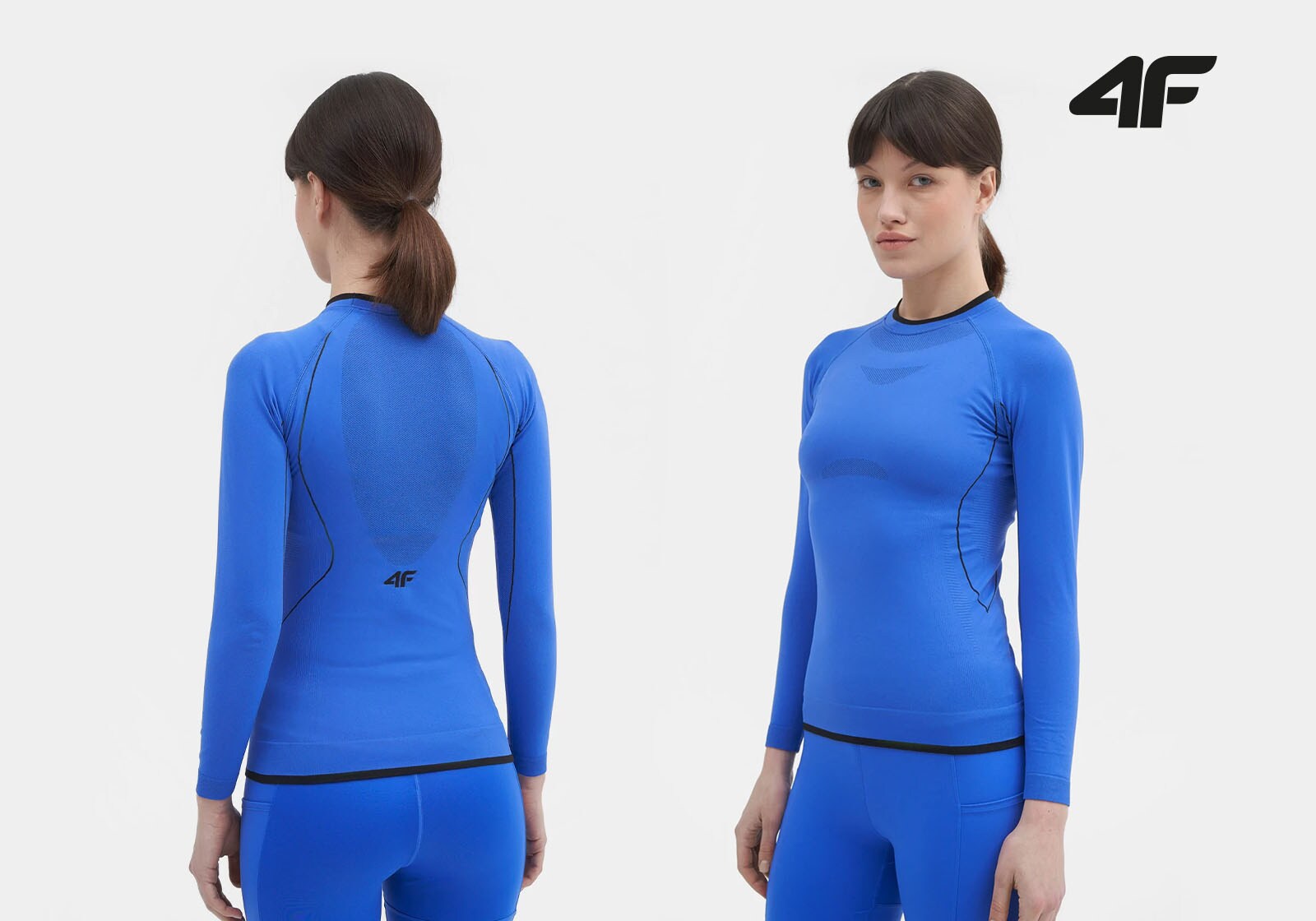
Contrary to appearances, not every type of thermal underwear will work well at negative temperatures. While some of the materials used are intended primarily to wick moisture away to the outside, other materials are designed to cool the body during intense use. This is the case, for example, for bamboo fibre underwear. So, make sure that the given material is suitable for the winter season and provides additional insulation from cold temperatures. Also, the thickness of the fabrics used matters. It’s easy to guess that thick, high-rise leggings or top will have much better heating properties than the thin ones intended for summer months. Finally, a word on the cut. If you want to keep your skin warm while effectively wicking away moisture, do not choose tops with elbow-length sleeves and short leggings. This seemingly small difference may prove significant in the outdoors.
What type of thermal underwear for skiing?
In the case of thermal underwear intended for skiing, apart from insulation from the external temperature, the function of immediate moisture wicking is fundamental. Anyone who’s ever gave skiing a go will admit that ski underwear must perfectly wick away sweat, otherwise we risk hypothermia, and we may lose heart for skiing for years to come. All it takes to avoid this is to ensure that the underwear style we’re considering isn’t too thick and is intended for intense exercise. Remember to carefully select the size. This applies to other winter sports too. Snowboard underwear should be also properly fitting to effectively wick away moisture, yet it cannot restrict our movements. Good ventilation helps reduce the unpleasant odour too and well, we know that winters sports are not only great fun, but also intense exercise. Functional underwear is a part of your ski outfit; though invisible for the majority of the day, you're bound to have a break eventually and take off your jacket and sweatshirt. So don’t forget to choose your favourite, stylish colour!
Check out thermal underwear for skiing or snowboarding.
£26.99
£33.11-%
£26.99
£33.11-%
£17.38
£26.20-%
£22.62
£26.20-%
£22.62
£26.20-%
£22.62
£28.74-%
)
)
)
£11.27
£20.00-%
)
)
)
£13.02
£15.64-%
£22.62
£28.82-%
£13.02
£15.64-%
£13.02
£22.62-%
£15.64
£20.00-%
Everyday thermal clothing
While some wear thermal underwear only when practicing sports, others use it as an additional layer of clothing for everyday use. Functional underwear works well when you work outdoors, especially at low temperatures, as well as during everyday activities. You don’t like to be cold, and it’s difficult for you to handle staying outside in the winter? Instead of wearing a cotton top as the base layer of clothing, consider wearing a set of functional underwear. After all, insulation from external temperature, good ventilation and reduced odour are all the features that can help not only during intense exercises. Why not use practical sports underwear when walking your dog or even going to work or school? Below you will find answers to the most frequently asked questions about the use of thermal clothes on a daily basis.

)
)

)
)

)
)
Men's seamless thermal underwear with Merino wool (top) - black
View productMen's seamless thermal underwear with Merino wool (bottom) - blac...
View productThermal underwear - washing and cleaning
How to wash thermal underwear?
There are opinions that thermal clothing should not be washed as it may lose its properties. Quite the contrary! Sweat produced by our body during exercise clogs the pores in the fabric. Over time, dirty thermal underwear will start to lose its properties, not to mention its unpleasant odour. So, how to clean thermal underwear without damaging it? Obviously, opinions are divided. Some say hand-wash is the only way, others claim machine wash won’t damage it. In any case, if we wash it at a temperature below 30 °C, we certainly won't damage the underwear. The only thing to remember is not to use washing powder and fabric conditioner for washing or choose a detergent for kids, as it is less aggressive. We can use a special detergent for washing thermal clothing or simple household soap or soap flakes. High-speed spin drying, tumble drying, and ironing are not recommended while cleaning thermal underwear.
Our tips on what type of thermal underwear to choose
Are you about to buy thermal underwear? At 4F, you will find various options for a versatile base layer that is perfect for the slopes, but also for winter walks. See why you should choose seamless 4F underwear:
-
Fabric - It’s durable, long-lasting, and does not accumulate sweat odour. Thanks to the knitted mesh thermoregulation zones, the skin breathes and is protected against overheating at the same time.
-
Seamless technology - The use of seamless technology supports comfort during dynamic movements. The lack of seams means no chafing, no digging into your skin and, most importantly, does not reduce blood circulation.
-
Finish - The 4F Dry technology finish makes the fabric absorbent and quick-drying while sweat is wicked away.
-
Designated zones - The underwear is designed in line with the body map, making it more absorbent and breathable in the body's most sweat-prone areas.
-
Thickness - Products of various thickness give you the opportunity to choose underwear perfect for your needs.
Technologies and types of finishes of 4F products
There are three main technologies featured in 4F's base and second layer ski apparel:
-
4F Dry - a type of finish that allows the knit fabric to absorb moisture from the skin much faster,
-
4F Skin - clothing closest to the body, inspired by the concept of "second skin." In the case of ski underwear, all styles are seamless. With flat seams, the technology minimises the risk of chafing. 4F Skin includes the properties of the 4F Dry technology,
-
4F Warm - provides thermal comfort, breathability, and wearing comfort thanks to the special structure of the material. In the case of ski underwear, it will be insulating (warming) underwear. It is warm, lightweight, pleasant-to-touch and breathable.
So, do you know when, what, and how now? Choose thermal underwear that fits you perfectly at one of our brick-and-mortar stores and on the 4F website.
£26.99
£33.11-%
£26.99
£33.11-%
£17.38
£26.20-%
£22.62
£26.20-%
£22.62
£26.20-%
£22.62
£28.74-%
£11.27
£20.00-%
£13.02
£15.64-%
£22.62
£28.82-%
£13.02
£15.64-%
£13.02
£22.62-%
£15.64
£20.00-%
Popular on the blog
- ✨ Lifestyle
4F joins Wings for Life World Run as Global Apparel Partner
Sportswear experience brand 4F is joining forces with the Wings for Life World Run to help find a cure for spinal cord injury. As a Global Apparel Partner, 4F wants to bring added expertise and fun to all
- 💡 Tips|✨ Lifestyle
What should you wear when it’s cold in the morning but warm later on?
It may seem sunny, yet still chilly? The weather in Poland, especially during transitional seasons, is constantly changing. If you’re standing in front of your wardrobe wondering how to dress for 15 degrees
- 💡 Tips|🏋 Fitness
Protein Powders – when to introduce and how to choose the best?
We start thinking about protein supplementation when we want to build muscle mass. This decision is no longer taken only by men. More and more women are becoming aware that they cannot build beautiful muscles,
- 💡 Tips|🚿 Clothing care|👟 Shoes
4F Compendium – how to wash sports clothing and footwear
Sportswear and footwear only fulfil their function if they are used as intended. Also, keep in mind the correct cleaning and maintenance procedures, which are different for jackets, underwear, shoes or sports
Get to know sport inside out


