

Regardless of age, gender or the nature of your daily work, a regular yoga practice is great for your body and mind. This type of activity opens up space to fully focus on your breath, get to know your body,
Activity zone 4F
In this zone, your heart rate rises at the mere thought of the next workout. You'll find the best ways to exercise effectively, discover new disciplines, and choose an outfit that suits your needs. We'll also guide you through the clothing care process and advise what to buy for enthusiasts of various sports. Our blog is a guide for everyone who wants to feel motivation 4 times more!
Published: 2/16/2024🏂 Winter sports


)
)
)
)
)
)
)
)
)
)

)
)
)
)

)
)
)
)
)
)
)
)
)
)
)
)
)
)
)
)
)
)
)
)
)
)
)
)
)
)
)
)
)
)
)
)

How to choose a snowboard that’s best for you?

Are you planning to buy your own snowboard? Not sure which parameters to pay attention to? What to ask the salesperson about? Check out what are the differences between various snowboard types and pick the one that you’ll take with you to hit the slopes this year.
In this article
-
Size it Right: Consider both height & weight for snowboard selection. A chart helps, but remember your weight distribution matters.
-
Find Your Fit: Snowboard width should match your shoe size comfortably. Wider options exist for larger feet (size 11+).
-
Different Profiles, Different Feels: Choose between camber (advanced control), rocker (beginner-friendly), flat (stable all-around), or hybrid (mix of benefits) for your skill level and desired riding style.
-
Twin or Directional?: Decide if you want to ride both ways (twin) or just forward (directional) based on your terrain preference (park vs powder).
-
Stiffness Matters: Stiffer boards require more skill but offer better response. Choose based on your experience, weight, and riding style (1-10 scale).
-
Board Types Galore: Explore All Mountain, All Mountain/Freestyle, Freestyle, and Freeride options, each designed for specific riding styles and comfort.
-
Boots First: Try on boots before the board! Ensure proper fit and comfort with the right flex (4-5 for beginners). Consider lacing systems too (traditional, speed, BOA).
-
Dress for the Slide: Invest in breathable, waterproof snowboard clothing like thermals, sweatshirts, jackets, and pants. Remember the looser, snowboard-specific cut.
-
Protect Yourself: Helmet, goggles, and balaclava are essential for warmth and injury prevention.
-
Warm Hands & Feet: Choose snowboard gloves with wrist guards and comfy socks for optimal performance.
-
Gear Up for Success: Invest in high-quality equipment for your comfort, safety, and faster progress.
Short summary
Snowboard size vs. a rider’s height and weight
Just a few, a dozen years back, snowboard size was selected based ‘roughly’ on the rider’s height. It was assumed that a snowboard reaching up to the snowboarder’s chin or nose would be fine for riding. Now, rider’s weight is also checked. Every snowboard has its own load tolerance. Pressure on the snowboard will be distributed differently depending on its size. When purchasing a snowboard, make sure your weight falls within the load tolerance range of the board. Every snowboard producer has their own table that helps select the right equipment while taking into account both the rider’s height and weight. These values differ depending on gender, as well as intended use of the board and manoeuvres you plan on doing (a shorter snowboard works better at a snow park, while a longer one is better for pow riding). Snowboard size is also affected by preferred stance width (a wider stance requires a longer board).
Snowboard width vs. shoe size
Choosing snowboard width is not difficult at all. A standard width for a snowboard is 24-26 cm. It’s recommended to try on snowboard shoes and check how they go with a board of a given size. Riders with larger feet may need an extra wide snowboard. It usually applies to people with shoe size 11 and more. Such a model is usually about 1 cm wider than a similar standard snowboard of the same size. A snowboard that’s too wide may cause the rider to catch the snow with their toes or heels. Wide snowboards include mid-wide and superwide models.
Various snowboard profiles
There are plenty of snowboard models available, and manufacturers still keep on adding new types. So which one should you choose? There’s no one-size-fits-all advice, as it all depends on skills, preferences, and the intended use of your snowboard. Four basic snowboard types are: camber, rocker, flat and hybrid. Camber is intended for experienced riders, as it demands superior board control. Rocker, on the other hand, is a snowboard type that is forgiving towards the mistakes that beginners make. Flat features nearly no arc and guarantees stability in all conditions. The graphic below presents the described snowboard profiles.
-
Traditional camber – the most versatile snowboard that ensures stability at high speed. It’s a classic profile that’s arched between the bindings. It provides good stability at landings, but requires more advanced skill from a rider. It’s extremely versatile and features a large pop (board springiness).
-
Reverse camber / Rocker / Banana – makes it easy to turn and do various tricks on the slope. The board is curved in the opposite direction as camber. It’s a great choice for beginners as it’s easy to control and guarantees great fun on the slope.
-
Flat camber / flat – a flat snowboard; this model falls between camber and reverse camber. A universal type where the entire length of the snowboard is in contact with the snow.
-
Hybrid – an attempt to combine the benefits of two profiles: camber and rocker.
Symmetrical and asymmetrical shapes
A snowboard can be either symmetrical or asymmetrical. This applies to both its short and long axis. A standard snowboard is symmetrical – it’s a so-called twin. You can ride such a board in both directions. Available for sale are also boards that allow you to ride in one direction only – so-called directional boards. They’re intended for riding in pow and for freeride snowboarding. There are also available boards asymmetrical along one axis, where the toe edge is angled differently than the heel edge.
Snowboard stiffness
As a rule of thumb, the stiffer the board, the more sensitive to pressure it is. In other words, a stiff board requires gentle manoeuvring, thus being dedicated to riders that can boast advanced snowboarding skills. Stiffness is usually rated on a scale from 1 to 10, where 10 marks the stiffest board in a given product group. Stiff boards are products for experienced snowboarders who ride aggressively. When choosing a stiff board, it’s worth considering all the factors when making a decision: experience, riding style, and weight. Remember that every manufacturer defines the stiffness rating of their equipment, e.g. whatever is deemed number 5 by one manufacturer may mean an entirely different value for other producer. Some producers use their own separate flex rating names, e.g. soft, medium, stiff.

Types of snowboards and their intended use
Depending on riding style and where you snowboard, a few snowboard types can be distinguished. They’re all adjusted in such a way to ensure comfortable riding and the best possible progress.
Beginner riders should narrow down their choice to All Mountain or All Mountain/Freestyle boards with medium flex. All Mountain snowboards are the most versatile, guarantee quick progress, and you can use them on the piste, in the snow park or off-piste. Freestyle boards have a characteristic profile (twin tip) with the centre of gravity located perfectly in the middle of the board. This allows you to ride with either foot forward. Freeride (FR) boards, on the other hand, are designated for fast riding on- and off-piste.
Snowboard boots and bindings
Purchasing boots should come before the choice of a snowboard. It’s best to try them on while wearing high socks that will be ultimately worn while hitting the slopes. Snowboard boots shouldn’t compress your foot with your toes touching the inner front edge of the boot. After tying the laces, walk a little in the boots. It’s extremely important there is no heel lift in your boot. Boot flex is rated on a scale from 1 to 10, where 1 marks a soft boot and 10 a very stiff one. Beginners are recommended to aim for 4-5, as it’s a versatile flex that ensures good foot support, board control and appropriate comfort. Particular boot styles differ when it comes to lacing systems, too.

Women's 10000 membrane snowboard pants - multicolor
View productWomen's brushed thermal underwear (top) - olive
View productUnisex Multi-Color Coating Snowboard Goggles - Khaki
View productMen's 10000 membrane snowboard jacket - blue
View productBrushed thermal underwear (top) for men - blue
View productMen's winter docker hat
View productUnisex Multi-Color Coating Snowboard Goggles - Black
View productBoy's 8000 membrane snowboard jacket - brown
View productBoy's seamless thermoactive underwear set - black
View productGirls' 10000 membrane snowboard jacket - purple
View productSki goggles with multi-color coating for girls - white
View productThere are three snowboard boot lacing systems:
-
traditional – featuring traditional laces,
-
speed lacing with a pull tab – a much faster way of lacing,
-
BOA – lacing the boot up with a dial (or two dials) on a tongue that tightens up steel cables.
Snowboard clothing – so what is it, exactly?
Just like it is the case with ski clothing, you need properly matched clothing pieces for snowboarding. This will help you avoid discomfort related to cold, chafing, and the sensation of sweaty back.
-
Thermal underwear – consists of a shirt and trousers that will keep you warm while avoiding the sensation of sweaty back.
-
Snowboard sweatshirt – provides extra protection against cold on the slope. It will also work perfectly during winter mountain getaways.
-
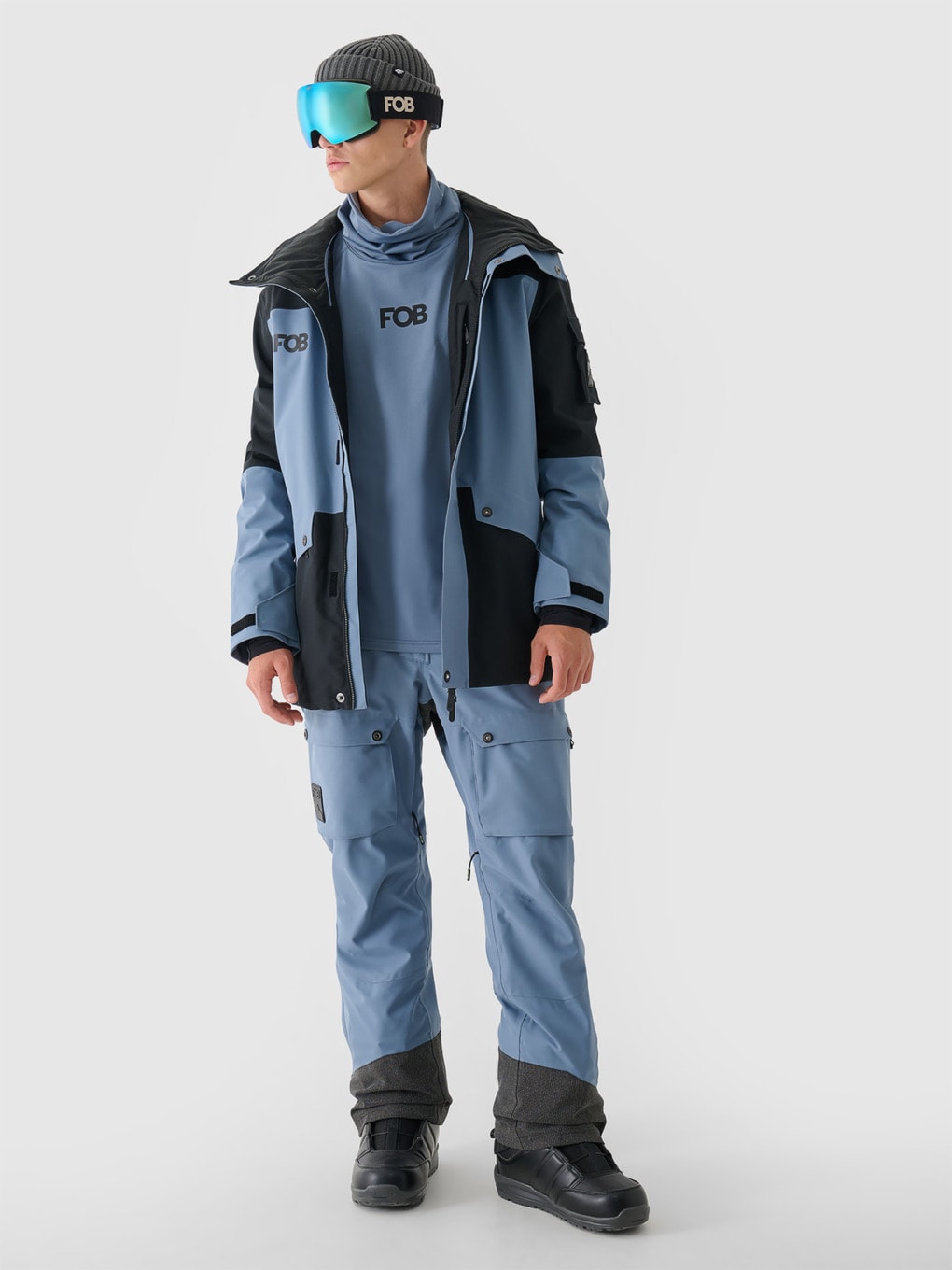
Snowboard trousers and jacket – breathability and waterproofness are two essential information you should pay attention to during purchase. The main difference between a snowboard jacket and a ski jacket lies with the cut. Snowboard jacket has a looser fit and is longer at the back. Snowboard trousers have special reinforced details on the knees. They also have a looser fit compared to ski trousers.
)
)
£26.99
£33.11-%
£26.99
£33.11-%
)
)
£22.62
£26.20-%
£22.62
£26.20-%
)
)
)
£22.62
£28.74-%
)
)
£7.42
£12.22-%
)
)
£22.62
£25.32-%
£28.74
£43.59-%
£28.74
£61.06-%
)
)
£26.99
£54.94-%
£26.99
£54.94-%
)
)
£33.11
£39.30-%
Accessories for comfort and safety
Do you already have all the basic elements of your snowboard attire? It’s time to pick accessories that will protect critical parts of your body against cold and injuries. Make sure to put on a helmet and snowboard goggles for your ride. Complete your snowboard outfit with a balaclava made of elastic, quick-drying fabric. The balaclava should have a looser, longer fit, covering the helmet and your neck. Choose snowboard gloves with wrist guards and socks made of soft material that not only guarantee optimal thermal comfort but also support your feet during pro activities on the slope.

A great season on the slopes
Before purchasing a snowboard or any other sports equipment, make sure to decide which parameters you should pay attention to and establish your own needs. A good choice will make snowboarding a pleasure and your progress much faster. Regardless whether the current winter season is your first on snowboard or you have already given it a try last year, take care of high-quality equipment – for your own comfort and safety.
Check out our full offer of snowboard clothes and accessories:
)
)
)
)
£26.99
£33.11-%
£26.99
£33.11-%
£13.02
£4.28
)
)
£11.27
£17.38-%
£22.62
£26.20-%
)
)
)
)
)
Popular on the blog
- 🧘 Yoga
Essential yoga accessories – What to consider at the beginning of your practice
Regardless of age, gender or the nature of your daily work, a regular yoga practice is great for your body and mind. This type of activity opens up space to fully focus on your breath, get to know your body,
- 🚴 Cycling|💡 Tips
How to dress for cycling?
Comfortable tracksuit, maybe bicycle clothing? How to dress for cycling to enjoy comfort? We suggest what to wear depending on the season, weather conditions, and your preferred driving style. Cycling is
- 💡 Tips|🚿 Clothing care
Membrane clothing – how to wash softshell?
Many people think that washing a jacket with a membrane destroys it irreversibly. On the contrary. Excessive dirt and dust clog the membrane micropores, which weakens its protective and breathable properties.
- 💡 Tips|🤸 Training plans
Exercises for seniors – a safeway to improve your fitness every day
Adulthood does not necessarily mean giving up physical activity. Quite the opposite! At this stage, sensible and regular movement becomes the best investment in everyday independence and well-being. Proper
Get to know sport inside out


